Deep Dive into the Al Barid Bank Data Breach: What Moroccan Customers Need to Know
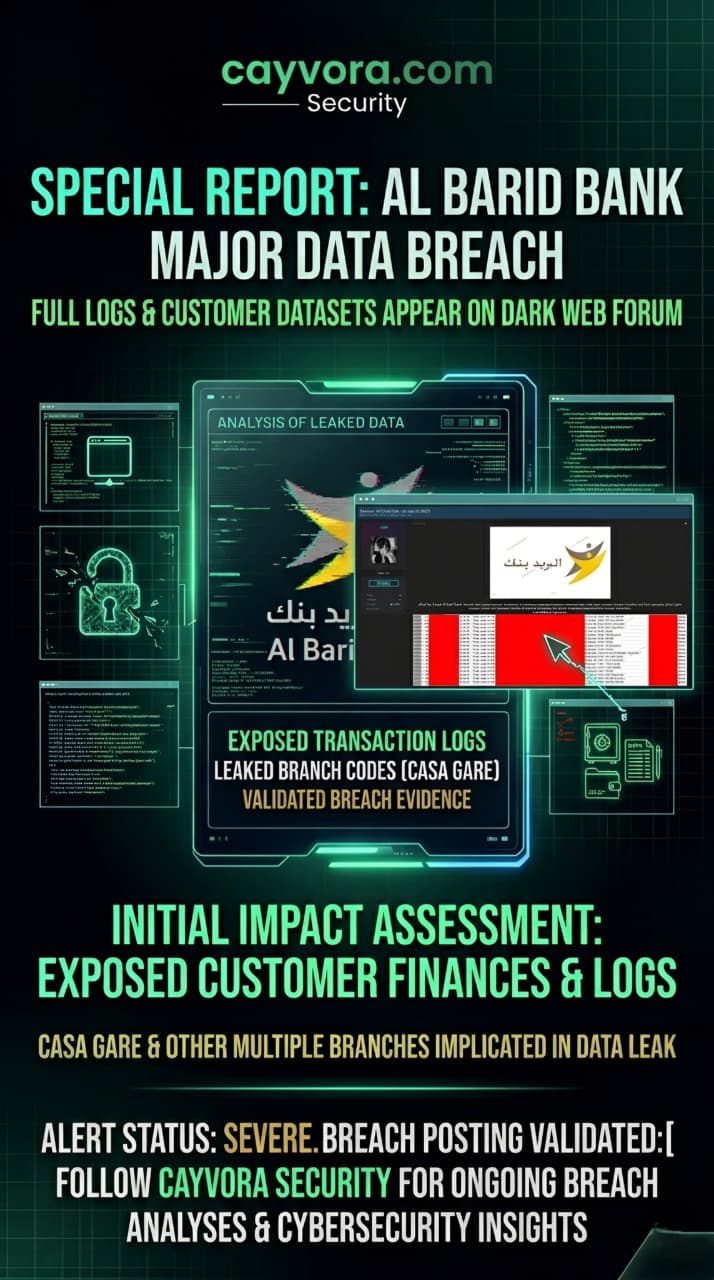
Recent investigations conducted by Cayvora Security have confirmed a major data leak affecting Al Barid Bank customers across Morocco. Sensitive databases—including transaction logs, personal identification details, and branch-specific records—have been spotted for sale on prominent Dark Web forums. This incident represents one of the most significant cybersecurity events to impact the Moroccan financial sector in 2026.
Alert Status: SEVERE — Breach posting validated. The presence of specific branch data such as "CASA GARE" confirms the authenticity of this leak.
What Was Leaked?
Based on our analysis of the Dark Web listings, the exposed data includes:
- Customer Personal Information: Full names, national ID numbers (CIN), dates of birth, phone numbers, and residential addresses linked to Al Barid Bank accounts.
- Transaction Logs: Detailed financial transaction records including transfer amounts, dates, and recipient information. This data can be exploited for targeted financial fraud.
- Branch Codes & Internal References: Specific branch identifiers such as "CASA GARE" and other metropolitan branch codes were present in the dataset, validating its origin from Al Barid Bank's internal systems.
- Account Metadata: Account types, opening dates, and status indicators that provide attackers with a comprehensive profile of each customer.
How the Breach Was Validated
Cayvora Security's Dark Web monitoring team identified the listings through routine surveillance of major cybercrime forums. The validation process involved:
- Sample Data Cross-Referencing: The format and structure of the leaked records were consistent with Moroccan banking data standards, including CIN formatting and Moroccan phone number prefixes (+212).
- Branch Code Verification: The presence of recognizable branch identifiers (e.g., "CASA GARE" — Casablanca Gare branch) confirmed the data originated from Al Barid Bank's operational systems.
- Temporal Consistency: Transaction dates in the leaked samples align with recent banking activity periods, indicating the breach involves relatively current data.
Impact Assessment for Affected Customers
Customers whose data has been compromised face several immediate risks:
- Identity Theft: With full name, CIN, and address information exposed, attackers can impersonate victims for fraudulent account openings, loan applications, or SIM swapping attacks.
- Targeted Phishing (Spear Phishing): Armed with transaction history, attackers can craft highly convincing phishing messages referencing real transactions to trick victims into revealing banking credentials or OTP codes.
- Financial Fraud: Transaction logs and account metadata provide the blueprint for social engineering attacks against bank customer service representatives.
- Physical Security Risks: Residential addresses combined with financial data create risks for targeted physical crimes.
Recommendations for Affected Customers
If you are an Al Barid Bank customer, we recommend the following immediate actions:
- Change All Banking Credentials: Update your online banking password, PIN codes, and security questions immediately.
- Enable Two-Factor Authentication (2FA): If not already active, enable 2FA on your Al Barid Bank account and all linked email accounts.
- Monitor Account Activity: Review your recent transaction history carefully for any unauthorized charges or transfers. Report suspicious activity to your branch immediately.
- Beware of Phishing Attempts: Be extremely cautious of unsolicited calls, SMS messages, or emails claiming to be from Al Barid Bank. The bank will never ask for your full password or OTP via phone or email.
- Consider a Credit Freeze: Contact the bank to discuss additional account protection measures, including transaction limits and alert notifications for all account activity.
Broader Implications for the Moroccan Financial Sector
This breach underscores critical gaps in the cybersecurity posture of Moroccan financial institutions:
- Database Encryption: Sensitive customer data must be encrypted at rest using AES-256 or equivalent standards. If the leaked data was stored in plaintext, it indicates a fundamental failure in data protection practices.
- Access Control & Monitoring: The volume of data suggests either a compromised privileged account or inadequate database access monitoring. Financial institutions must implement the Principle of Least Privilege (PoLP) and deploy Database Activity Monitoring (DAM) solutions.
- CNDP Compliance: Under Morocco's Loi 09-08, organizations handling personal data are required to implement appropriate security measures. This breach may trigger regulatory investigations and potential penalties from the CNDP.
- Incident Response Readiness: The time between breach discovery and public disclosure is critical. Financial institutions must have established incident response plans that include customer notification protocols.
Conclusion
The Al Barid Bank data breach is a wake-up call for the entire Moroccan financial ecosystem. At Cayvora Security, we continue to monitor Dark Web forums for further developments and will provide updates as new information emerges. Financial institutions must treat cybersecurity not as an IT cost center, but as a fundamental pillar of customer trust and regulatory compliance.
If you suspect your data has been compromised or need assistance with a security incident, contact Cayvora Security for a confidential consultation.